In This Guide
Understanding Your Trees
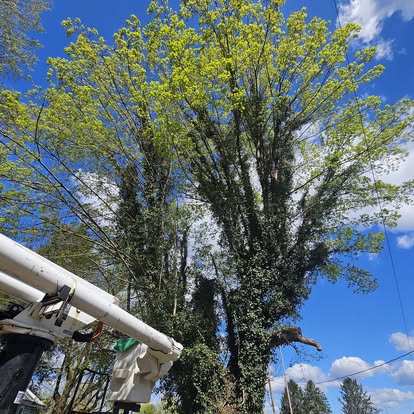
Trees are complex living organisms that require different care depending on their species, age, and environment. In the Huntington, WV tri-state area, we commonly see a diverse mix of native and ornamental species.
Common Trees in Our Area
Oak
Long-lived, strong wood, fall color
Maple
Fast-growing, brilliant fall color
Pine
Evergreen, year-round coverage
Dogwood
Spring blooms, compact size
Hickory
Native, wildlife value, hard wood
Tulip Poplar
WV state tree, fast growth
Tree Anatomy Basics
Understanding how trees work helps you care for them better:
- Crown: The leafy part that produces food through photosynthesis
- Trunk: Provides structural support and transports water/nutrients
- Roots: Anchor the tree and absorb water and minerals—most roots are in the top 12-18 inches of soil
- Root Flare: Where the trunk widens at the base—this should be visible above ground
Proper Watering Techniques
Water is essential for tree health, but overwatering and underwatering are equally harmful. Most tree problems we see are related to improper watering.
How Much Water Do Trees Need?
- Newly planted trees: 10-15 gallons per week for the first 2 years
- Established trees: 10 gallons per inch of trunk diameter during drought
- Frequency: Deep, infrequent watering is better than frequent light watering
Watering Best Practices
- Water at the drip line (outer edge of canopy), not at the trunk
- Water slowly to allow absorption—use a soaker hose or drip system
- Water early morning to reduce evaporation and disease risk
- Check soil moisture 4-6 inches deep before watering
Pro Tip
The "finger test" is simple: stick your finger 4 inches into the soil. If it's dry, water. If moist, wait. Clay soils in our area retain moisture longer than sandy soils.
Mulching Best Practices
Proper mulching is one of the best things you can do for your trees. It conserves moisture, regulates soil temperature, suppresses weeds, and adds organic matter as it decomposes.
How to Mulch Correctly
- Depth: Apply 2-4 inches of mulch
- Width: Extend mulch to the drip line if possible, minimum 3-foot radius
- Clearance: Keep mulch 3-6 inches away from the trunk
- Material: Use organic mulch like wood chips, shredded bark, or leaf mold
Avoid "Volcano Mulching"
Never pile mulch against the trunk! This common mistake causes bark decay, root girdling, pest problems, and disease. The root flare should always be visible.
Best Mulch Materials
- Wood chips: Best overall choice, slow decomposition
- Shredded bark: Attractive, stays in place well
- Leaf mold: Excellent for soil health
- Pine needles: Good for acid-loving plants
Pruning Fundamentals
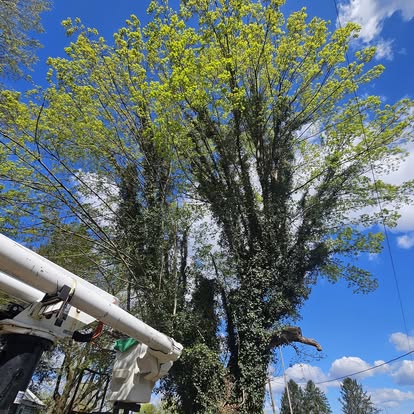
Proper pruning improves tree structure, health, and appearance. Improper pruning can cause lasting damage or even kill a tree.
Why Prune?
- Remove dead, damaged, or diseased branches
- Improve structure and reduce failure risk
- Increase light and air circulation
- Control size and shape
- Enhance flowering or fruit production
When to Prune
- Most trees: Late winter/early spring (dormant season)
- Spring bloomers: Right after flowering
- Dead branches: Any time of year
- Oaks: Avoid April-July (oak wilt risk)
Basic Pruning Cuts
- Thinning cuts: Remove entire branch at its origin—preferred method
- Heading cuts: Cut branch back to a bud—use sparingly
- Never top trees: Topping causes weak regrowth and long-term damage
Know Your Limits
DIY pruning should be limited to small branches you can reach from the ground. Any pruning requiring a ladder, chainsaw, or climbing should be done by professionals.
When & How to Fertilize
Trees in forest settings get nutrients from decomposing organic matter. Landscape trees may need supplemental fertilization, but more isn't always better.
Signs Your Tree May Need Fertilizer
- Stunted or slow growth
- Yellowing leaves (chlorosis)
- Small leaf size
- Poor flowering or fruiting
- Dieback in the canopy
Fertilization Best Practices
- Soil test first: Know what nutrients are actually needed
- Timing: Early spring or fall is best
- Application: Apply at drip line, not near trunk
- Type: Slow-release fertilizers are preferred
Often Overlooked
Healthy soil is more important than fertilizer. Adding organic matter through mulching and avoiding soil compaction often eliminates the need for chemical fertilizers.
Common Problems & Solutions
Early detection is key to managing tree health issues. Here are common problems we see in the tri-state area:
Fungal Diseases
- Anthracnose: Brown spots on leaves, early leaf drop. Improve air circulation.
- Powdery Mildew: White powder on leaves. Usually cosmetic, improves with airflow.
- Root Rot: Wilting despite moist soil. Improve drainage, avoid overwatering.
Common Pests
- Japanese Beetles: Skeletonized leaves in summer. Hand-pick or treat.
- Bagworms: Brown bags on evergreens. Remove by hand before June.
- Emerald Ash Borer: D-shaped holes, canopy dieback in ash trees. Treatment or removal needed.
- Scale Insects: Bumps on bark, sticky residue. Horticultural oil treatments.
Environmental Stress
- Drought stress: Wilting, early fall color, leaf scorch. Deep watering helps.
- Construction damage: Decline 2-10 years after root disturbance. Prevention is key.
- Salt damage: Browning on roadside. Use alternatives, flush soil in spring.
When to Call a Professional
While homeowners can handle basic tree care, many situations require professional expertise and equipment.
Always Call an Arborist For:
- Any work requiring climbing or aerial equipment
- Branches near power lines
- Trees showing signs of disease or decline
- Large branch or tree removal
- Structural concerns or storm damage assessment
- Cabling and bracing
- Diagnosis of unknown problems
Choosing the Right Arborist
- Certification: Look for ISA Certified Arborists
- Insurance: Verify liability and workers' compensation coverage
- References: Ask for recent local references
- Written estimates: Get detailed proposals in writing
- Avoid: Anyone who recommends topping or offers door-to-door services
Questions to Ask
A reputable arborist will explain what work is needed and why, discuss alternatives, and never pressure you into immediate decisions. Get multiple estimates for large projects.