Healthy trees provide beauty, shade, and value to your property. But trees face many threats—diseases, pests, environmental stress, and more. Early detection and proper treatment can often save an affected tree. This guide covers the most common issues we see in the Huntington, WV tri-state area.
Signs Your Tree May Be in Trouble
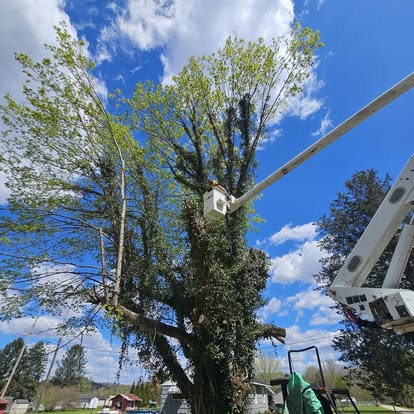
Regular observation is the key to catching problems early. Watch for these warning signs:
Early Leaf Drop
Leaves falling before autumn
Discolored Leaves
Yellowing, browning, or spots
Fungal Growth
Mushrooms, conks, or shelf fungi
Holes & Sawdust
Evidence of boring insects
Oozing Sap
Unusual sap flow from bark
Dead Branches
Branches with no leaves or bark
Thinning Canopy
Gradual loss of leaf density
Bark Changes
Peeling, cracking, or soft spots
Common Tree Diseases
These fungal, bacterial, and viral diseases are frequently encountered in our region:
Anthracnose
Affects: Sycamore, Oak, Maple, Dogwood, Ash
A fungal disease causing brown spots, leaf curling, and premature leaf drop. Most common in cool, wet springs. Severe infections can cause twig dieback.
Symptoms:
- Irregular brown spots on leaves
- Curled or distorted leaves
- Leaves dropping in late spring
- Dead twigs in severe cases
Treatment:
Improve air circulation through pruning. Rake and destroy fallen leaves. Fungicide treatments may help in severe cases. Most healthy trees recover with new growth.
Apple Scab
Affects: Apple, Crabapple
A fungal disease that causes olive-green to black spots on leaves and fruit. Severe infections lead to defoliation and reduced fruit quality.
Symptoms:
- Olive-green spots on leaves becoming brown/black
- Velvety texture on spots
- Yellowing leaves
- Scabby spots on fruit
Treatment:
Plant resistant varieties when possible. Remove fallen leaves. Fungicide sprays in spring can prevent infection. Improve air circulation.
Oak Wilt
Affects: Red Oak (highly susceptible), White Oak (less susceptible)
A serious vascular disease caused by a fungus that blocks water movement in the tree. Red oaks can die within weeks of infection.
Symptoms:
- Rapid wilting starting at branch tips
- Leaves turn brown from edges inward
- Leaves may fall while still green
- Fungal mats under bark on dead trees
Treatment:
Prevention is critical—avoid pruning oaks April through July. Infected red oaks usually cannot be saved. Trenching can protect nearby oaks by severing root grafts. Fungicide injection may help valuable white oaks.
Verticillium Wilt
Affects: Maple, Ash, Redbud, Magnolia, Catalpa
A soil-borne fungal disease that clogs the vascular system, causing wilting and branch dieback. Often fatal over time.
Symptoms:
- Sudden wilting of individual branches
- Leaves turning yellow, then brown
- Dark streaking in sapwood when cut
- Progressive branch dieback over years
Treatment:
No cure exists. Prune dead branches, fertilize to promote vigor, and water during drought. Severely affected trees should be removed. Avoid planting susceptible species in contaminated soil.
Fire Blight
Affects: Apple, Pear, Crabapple, Mountain Ash, Serviceberry
A bacterial disease that causes branches to appear scorched. Spreads rapidly in warm, wet conditions and can kill trees.
Symptoms:
- Blackened, wilted branch tips ("shepherd's crook")
- Leaves look burned but remain attached
- Reddish-brown cankers on bark
- Bacterial ooze from cankers
Treatment:
Prune infected branches 12+ inches below visible damage during dry weather. Sterilize tools between cuts. Copper sprays during bloom may reduce infection. Plant resistant varieties.
Common Tree Pests
Insect pests can cause significant damage to trees. Here are the most common in our area:
Emerald Ash Borer (EAB)
Affects: All Ash species
An invasive beetle that has killed millions of ash trees across North America. Larvae feed under the bark, cutting off water and nutrients.
Symptoms:
- D-shaped exit holes in bark
- Canopy dieback starting at top
- Increased woodpecker activity
- Bark splitting and S-shaped galleries beneath
- Epicormic sprouting (suckers on trunk)
Treatment:
Preventive insecticide treatments can protect valuable ash trees—treatment must begin before infestation. Once severely infested, removal is usually necessary. Early treatment is essential for success.
Emerald Ash Borer Alert
EAB is confirmed throughout the tri-state area. If you have ash trees, contact a certified arborist immediately to discuss protection options. Untreated ash trees in infested areas have a nearly 100% mortality rate.
Japanese Beetles
Affects: Over 300 species including Linden, Birch, Apple, Maple, Rose
Metallic green beetles that feed on leaves in summer, leaving behind "skeletonized" foliage. Adults feed for 4-6 weeks.
Symptoms:
- Skeletonized leaves (veins remaining)
- Clusters of beetles on foliage
- Damaged leaves turn brown
- Grubs damage lawns (white grubs in soil)
Treatment:
Hand-pick beetles into soapy water. Avoid traps near valuable plants (they attract more beetles). Treat lawns for grubs. Systemic insecticides protect high-value trees. Healthy trees usually survive.
Bagworms
Affects: Arborvitae, Juniper, Spruce, Pine, Cedar
Caterpillars that construct distinctive bags from silk and plant material. Heavy infestations can completely defoliate and kill evergreens.
Symptoms:
- Spindle-shaped bags hanging from branches
- Brown, dead foliage
- Branch death in severe cases
- Entire evergreens can be killed
Treatment:
Hand-pick and destroy bags before June (before eggs hatch). Spray Bt (Bacillus thuringiensis) when caterpillars are small in late spring. Chemical controls work on young larvae. Prevention is easier than treatment.
Scale Insects
Affects: Many species including Magnolia, Dogwood, Maple, Tulip Poplar
Tiny insects that attach to bark and feed on sap. Often overlooked until populations build up. They excrete honeydew that leads to sooty mold.
Symptoms:
- Bumps on bark and twigs
- Sticky honeydew on leaves and surfaces below
- Black sooty mold on foliage
- Yellowing leaves, reduced vigor
- Branch dieback in severe cases
Treatment:
Horticultural oil sprays during dormant season smother overwintering scales. Systemic insecticides are effective on soft scales. Proper timing is essential—contact an arborist for diagnosis and treatment planning.
Spotted Lanternfly
Affects: Tree of Heaven (preferred), Maple, Walnut, Willow, Grape, Apple
An invasive pest spreading across the eastern US. Adults are colorful and distinctive. Heavy feeding weakens trees and covers surfaces with honeydew.
Symptoms:
- Distinctive gray and red spotted adults
- Gray egg masses on trees, rocks, outdoor items
- Weeping sap from feeding wounds
- Sooty mold from honeydew
- Swarms on host trees
Treatment:
Destroy egg masses (scrape into alcohol or hand sanitizer). Report sightings to state agriculture department. Remove Tree of Heaven when possible. Professional treatments can protect valuable trees. Circle traps catch adults.
Environmental Stress
Not all tree problems are caused by pests or diseases. Environmental factors can cause significant decline:
Drought Stress
Wilting, early color, leaf scorch
Overwatering
Yellow leaves, root rot, decline
Soil Compaction
Stunted growth, thin canopy
Salt Damage
Brown edges, stunted growth
Construction Damage
Gradual decline over years
Lightning Strike
Bark strips, sudden decline
Construction Damage Warning
Tree decline from construction damage often doesn't appear for 2-10 years. If major construction occurred near your trees, monitor them closely for signs of stress. Preventive care may help them survive.
Keeping Trees Healthy: Prevention Strategies
- Water properly: Deep, infrequent watering encourages strong root systems
- Mulch correctly: 2-4 inches of mulch away from trunk conserves moisture and protects roots
- Avoid damage: Protect bark from mowers, trimmers, and construction
- Prune properly: Remove dead wood and make clean cuts; avoid topping
- Right tree, right place: Choose species suited to your site conditions
- Monitor regularly: Catch problems early when treatment is most effective
- Fertilize wisely: Only when needed based on soil testing
- Maintain soil health: Avoid compaction and improve drainage
When to Call an Arborist
Professional diagnosis and treatment is recommended for:
- Any significant change in tree appearance or health
- Suspected Emerald Ash Borer or other serious pests
- Large or valuable trees showing stress
- Disease symptoms spreading to multiple trees
- Trees near structures that may pose a risk
- Before and after construction projects
- Whenever you're unsure what's wrong
Free Health Assessments
Parlock Property Services offers tree health evaluations as part of our free estimate service. Our ISA Certified Arborists can diagnose problems and recommend treatment options—no obligation.